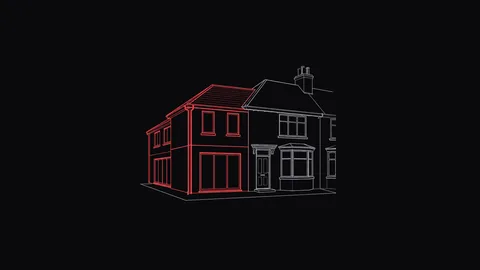
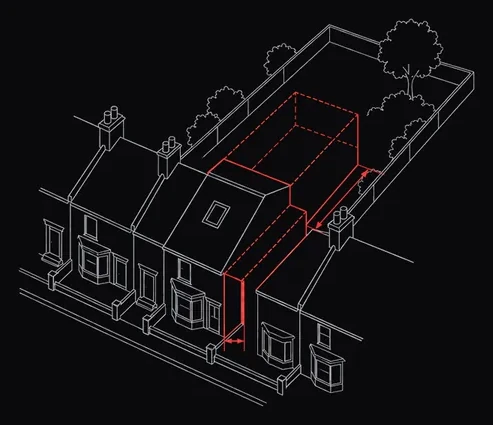
Illustration of a terraced house from above with the permitted development limits for rear and side extensions shown as red outlines and depth lines without figures

Permitted development extension rules: sizes, planning permission and the 45 degree rule

Many house extensions in London need no planning application: they are permitted development under Class A of the GPDO, as long as they stay within set sizes. This guide sets out the extension size limits, when planning permission is needed, and what happens to an extension built without it.

Extension size: planning permission or permitted development

For a house that still has its permitted development rights, a single storey rear extension can extend:

  • up to 4 metres beyond the rear wall of a detached house, or 3 metres for any other house;
  • up to 8 metres for a detached house, or 6 metres for any other house, under the larger home extension scheme, which needs prior approval from the council;
  • no higher than 4 metres, and no higher than 3 metres at the eaves if it is within 2 metres of a boundary.

Measurements are taken from the original house, as it was built or as it stood on 1 July 1948, so an earlier extension counts against the allowance. Extensions and other buildings together must not cover more than half the garden around the original house, and the materials must look similar to the house.
Side extensions and two storey rear extensions

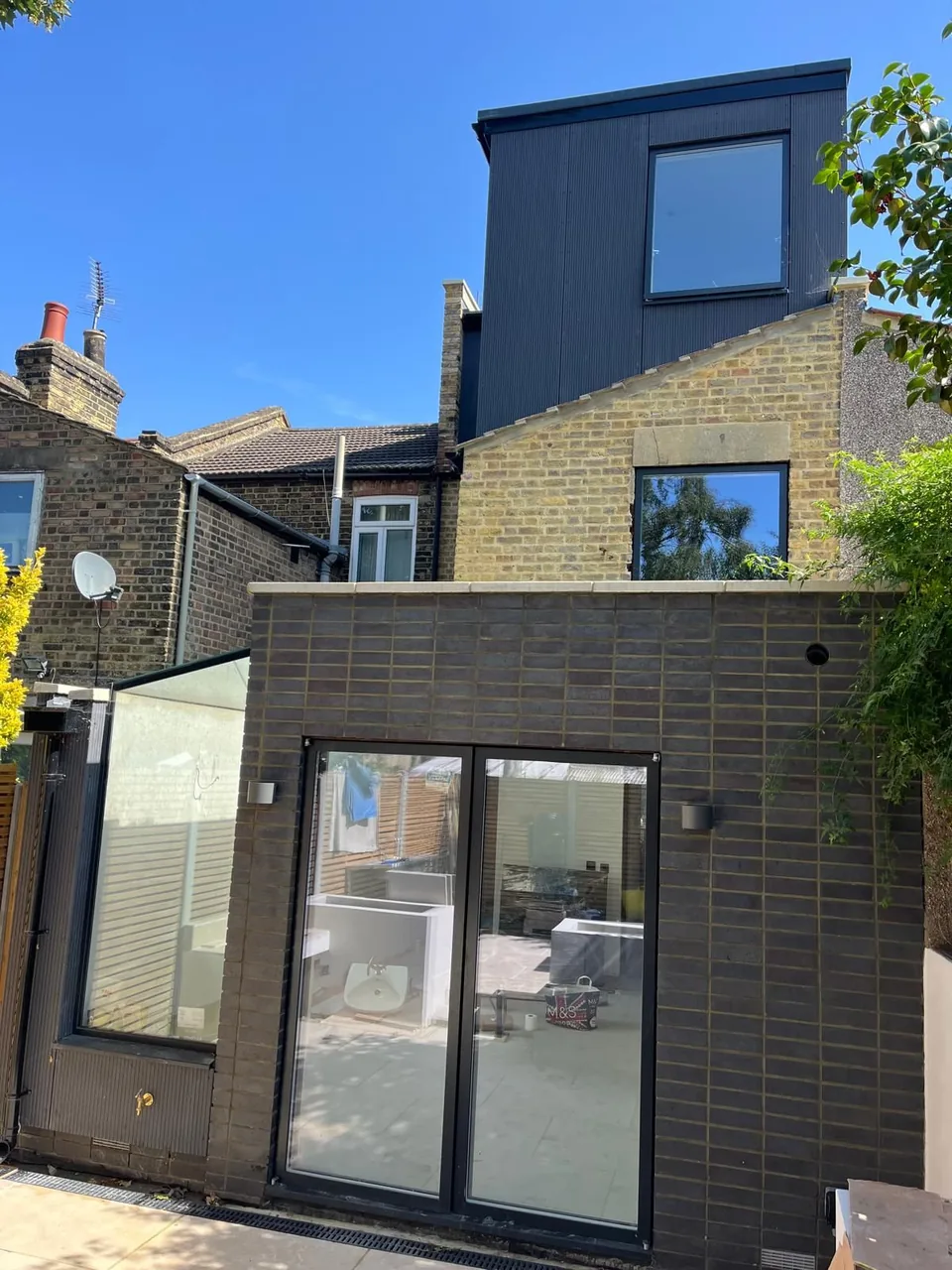
A single storey side extension can be permitted development if it is no more than 4 metres high and no wider than half the width of the original house. A side extension of more than one storey always needs planning permission. An extension that also goes beyond the rear wall of the original house, such as a wrap-around, must meet the rear extension limits as well. A permitted development 2 storey rear extension can extend no more than 3 metres, must be at least 7 metres from the rear boundary, and its upper side windows must be obscure glazed and non-opening below 1.7 metres. Our two storey extension post covers the cost side.

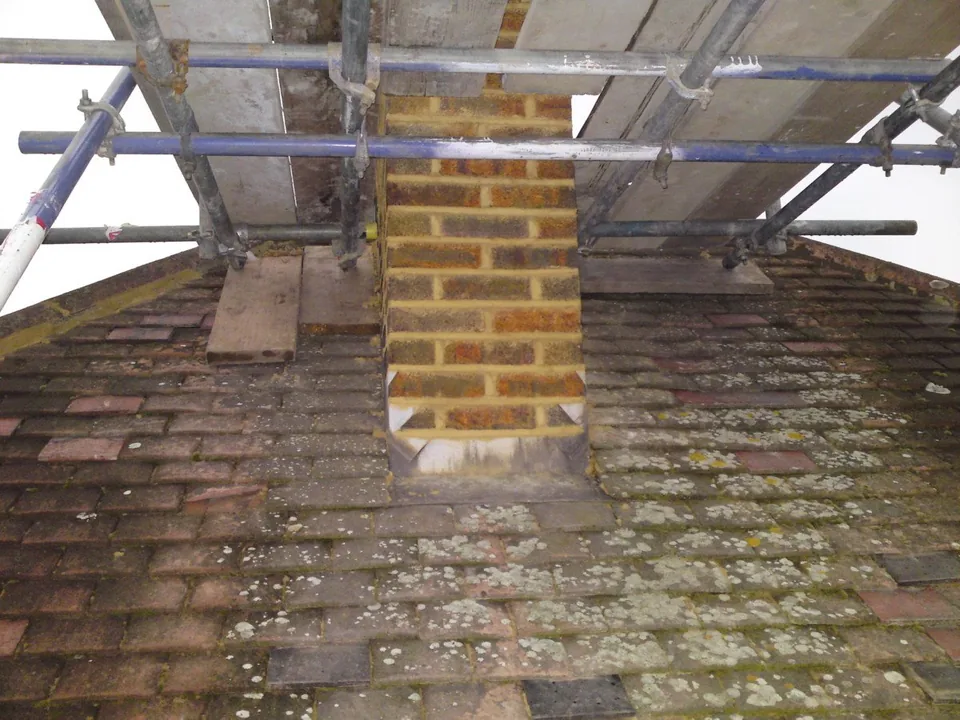
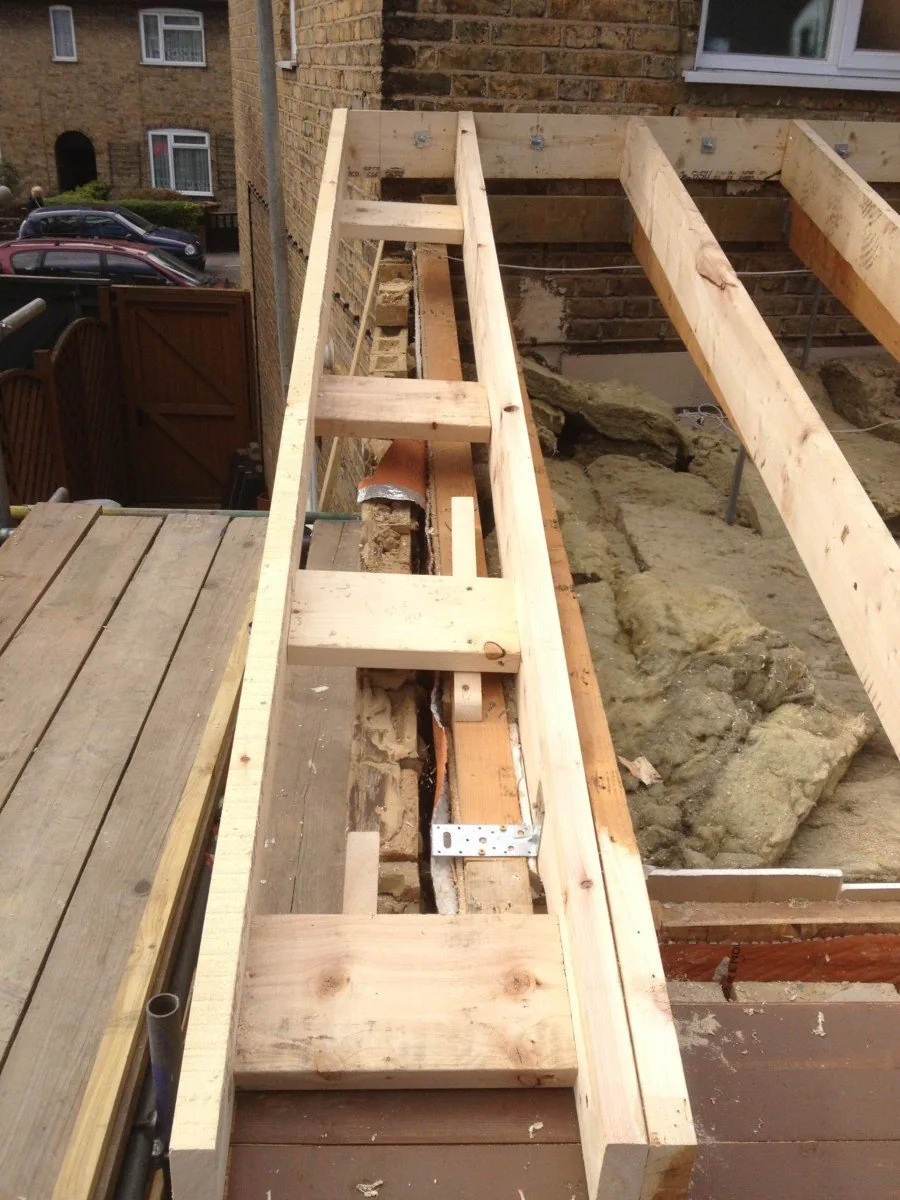
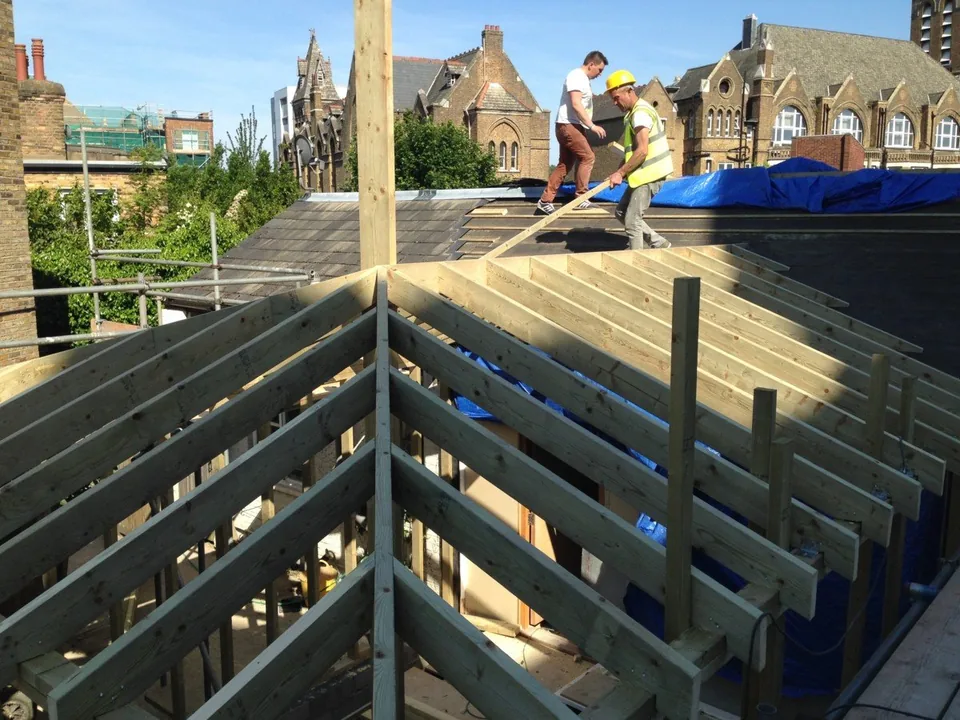
Closer rear view of the dormer, KRAMAN Ltd, LondonTimber rafters forming the hipped roof of the Highgate extension during construction, KRAMAN Ltd, LondonChimney stack on a tiled roof in Stratford during repair, under scaffolding, KRAMAN Ltd, LondonTimber joists and insulation during roof work on the Walthamstow house, KRAMAN Ltd, London

When you need planning permission for an extension

  • The extension is larger than the limits above, or goes forward of the front of the house or a side facing the road.
  • The house is a flat or maisonette, which has no permitted development rights.
  • The house is in a conservation area, where side extensions and cladding need permission, or is listed.
  • An Article 4 direction or a planning condition has removed the rights.
  • It includes a veranda, a balcony or a raised platform higher than 300 mm.

Our conservation area guide covers the stricter rules there.

House extension rules councils apply: the 45 degree rule

When an extension needs planning permission, councils judge its effect on neighbours. Many use a 45 degree test: a line drawn at 45 degrees from the middle of a neighbour’s nearest ground floor window should not be crossed by the extension. It is a guideline from daylight guidance, not law, and each London borough words it in its own design guide.

Prior approval, Lawful Development Certificates and building regulations

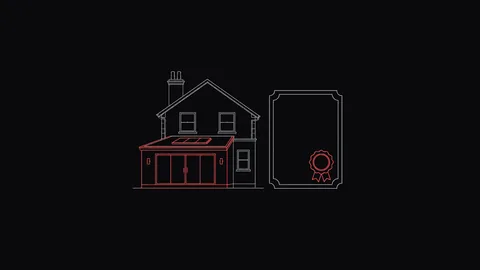
For the larger home extension scheme, the council notifies the neighbours and decides within 42 days whether the effect on their amenity is acceptable. For other permitted development, a Lawful Development Certificate confirms the extension is lawful, which helps when you sell. Permitted development is a planning matter only: every extension still needs building regulations approval, as our building control guide explains.

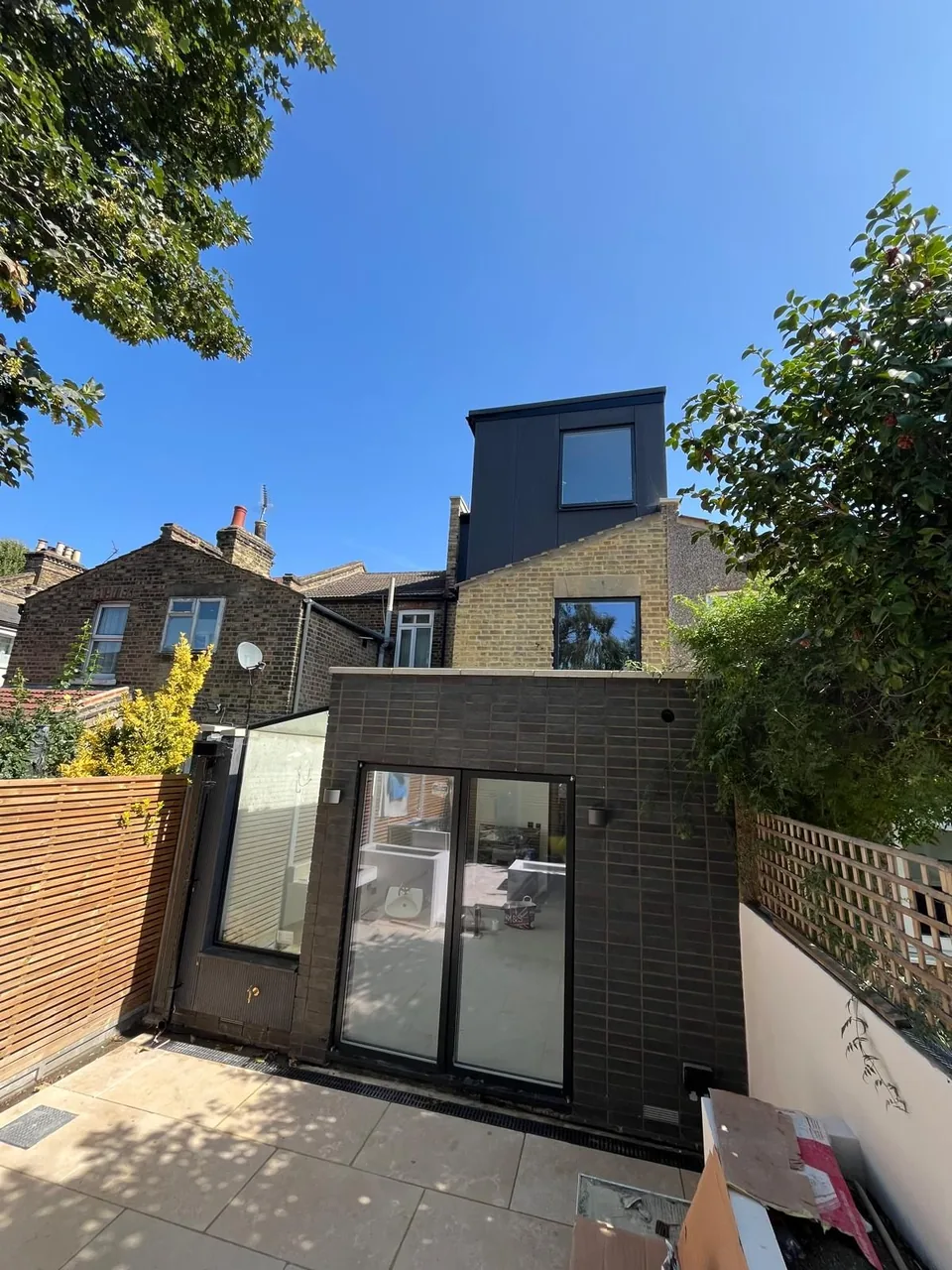
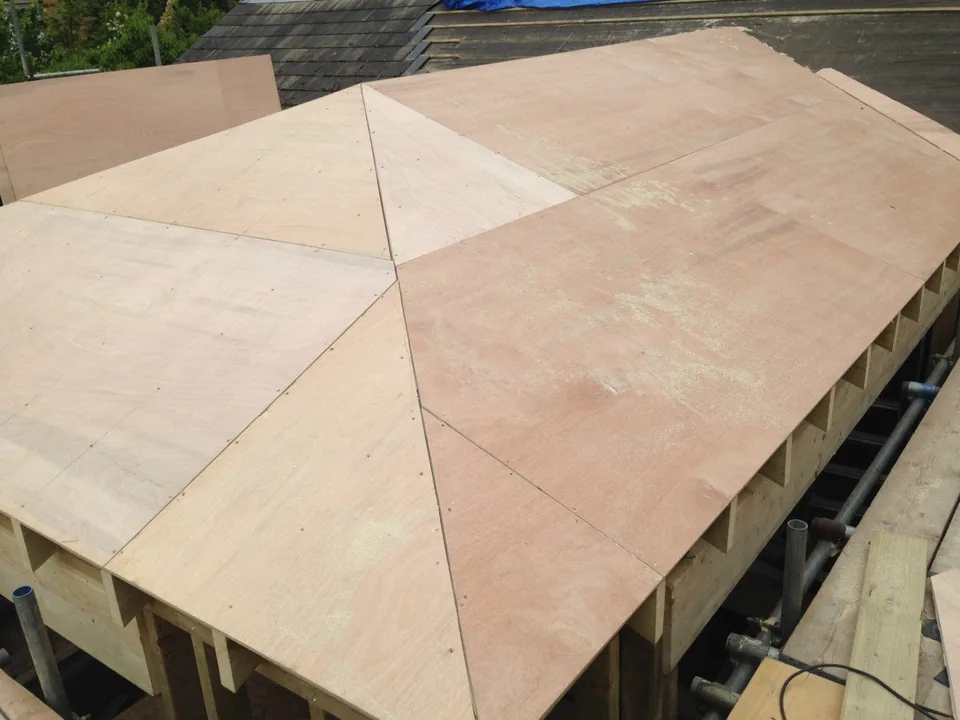
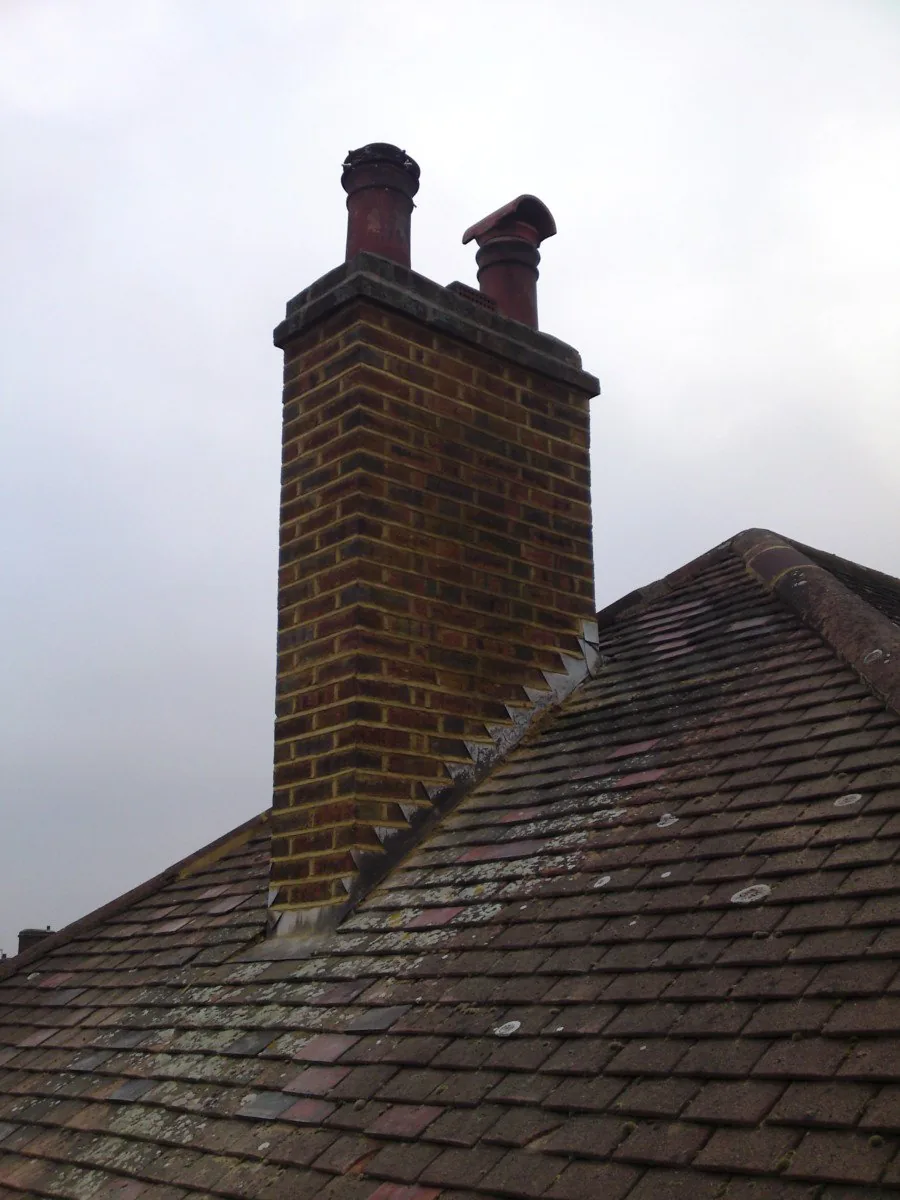
Panelling being fitted along a staircase wall in Winchmore Hill, before painting, KRAMAN Ltd, LondonThe rear extension and roof addition viewed from the garden, KRAMAN Ltd, LondonPlywood sheathing on a new hipped roof in Highgate, before the roof covering, KRAMAN Ltd, LondonBrick chimney stack with chimney pots on a tiled roof in Stratford after repair, KRAMAN Ltd, London

An extension without permission

If an extension needed planning permission and was built without it, the council can ask for a retrospective application and can take enforcement action. Since 25 April 2024 the time limit for enforcement in England is 10 years for most breaches, so an unauthorised extension built after that date is not safe after four years as it used to be; work substantially completed before 25 April 2024 keeps the old four-year period. A buyer’s solicitor will ask for the planning papers.

Questions people ask

How far can a permitted development 2 storey rear extension go?

No more than 3 metres beyond the rear wall, at least 7 metres from the rear boundary, with the roof pitch matching the house as far as practicable.

Is single storey planning permission needed for a rear extension?

Not when the extension stays within the permitted development limits on depth and height and the house keeps its rights; beyond them, or on a flat, it is.

How big can an extension be without planning permission?

A single storey rear extension can extend 3 metres on most houses or 4 metres on a detached house, rising to 6 and 8 metres under the larger home extension scheme with prior approval, and no higher than 4 metres.

Is a side return extension permitted development?

A single storey side return can be, within 4 metres high and half the width of the original house, and not in a conservation area; if it also goes beyond the rear wall, the rear extension limits apply too.

What is the 45 degree rule for extensions?

A guideline councils use: the extension should not cross a line drawn at 45 degrees from the middle of a neighbour’s nearest window; it is not law.

What happens if I build an extension without planning permission?

The council can ask for a retrospective application and take enforcement action, within 10 years for most breaches since April 2024.

Call us